



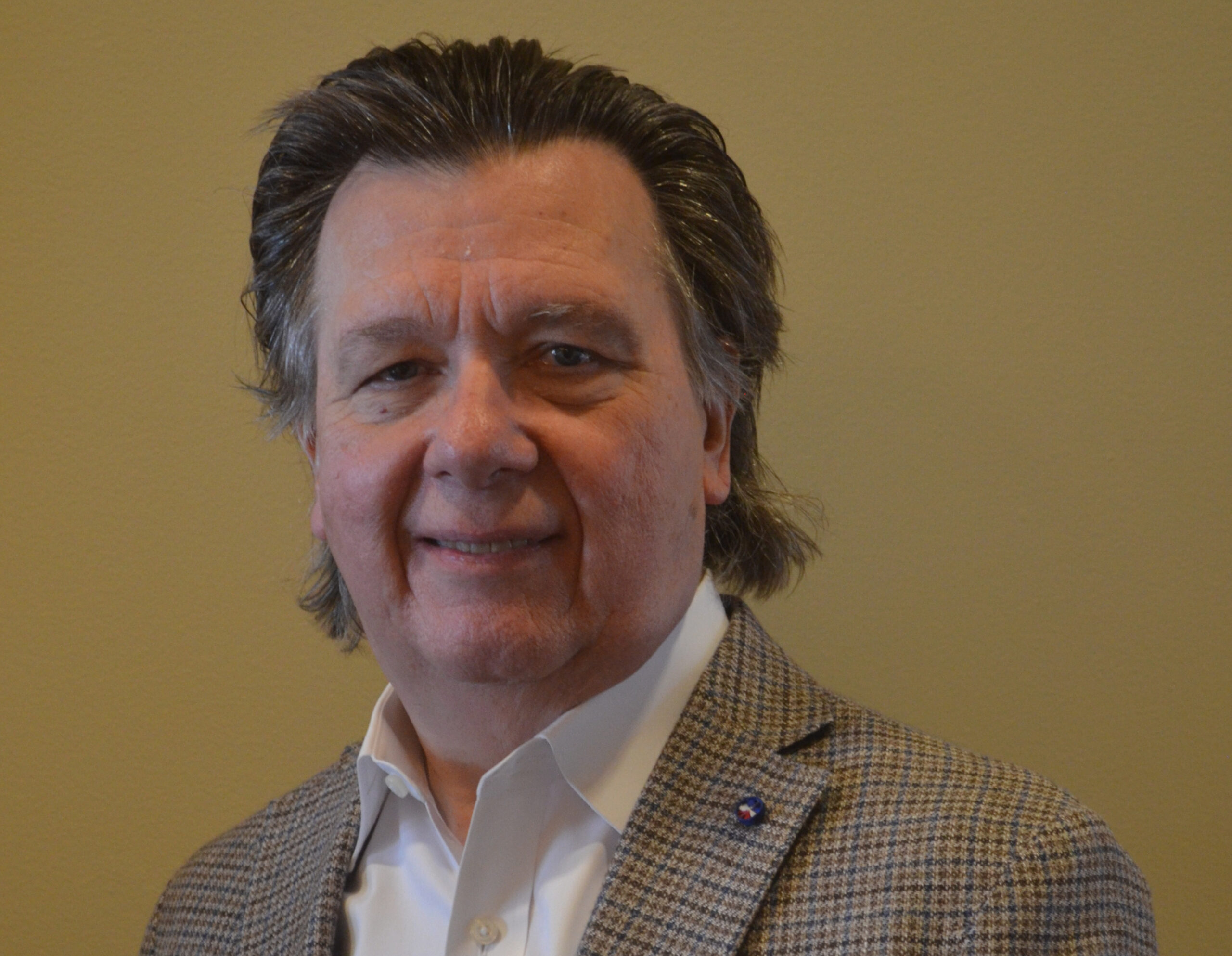
For 17 years, the Unabomber skillfully eluded investigators, leaving behind no fingerprints, DNA, or usable forensic evidence but in the end it was his own words that gave him away. Dr. Phil Stieg speaks with retired FBI criminal profiler James Fitzgerald, a pioneer of forensic linguistics whose analysis of Ted Kaczynski’s writings helped crack one of the most notorious investigations in FBI history. Fitzgerald reveals how investigators constructed a personality profile from the bomber’s writings, identified the unusual turn of phrase that became a “linguistic smoking gun,” and used patterns in language and behavior to identify this notoriously elusive criminal mind. Plus, an exclusive glimpse into a family’s traumatic moment when they discover their relative is a serial bomber.
Excerpt from documentary in progress “Life Or Death” featuring David Kaczynski and Linda Patrik
Producers Mike Camoin and John Carlson
www.videosforchange.com
Phil Stieg
For 17 years, an unknown bomber mailed and planted homemade explosives across the United States, killing 3 people and injuring 24 more. The FBI had no fingerprints, no DNA, and no usable forensic trace. However, what he did leave behind was a manifesto that revealed the inner workings of his mind. My guest today, James Fitzgerald, is a retired FBI supervisory special agent and criminal profiler who joined the Unabomb Task Force in 1995. He’s widely credited as a pioneer of forensic linguistics. The science of reading a person from their language. His analysis of the Unabomber’s writings was central to the breakthrough that led agents to a remote cabin in Montana where they finally apprehended Ted Kaczynski.
Today we’ll talk about what it means to profile a criminal mind, how investigators reverse engineer a person from their words, their habits, and their crimes, and what one of the most famous cases in American criminal history reveals about the brain.
Jim, thank you for being with us today.
James Fitzgerald
Phil, it’s great to be with you. Thanks for inviting me on your This Is Your Brain podcast.
Phil Stieg
All right, let’s probe the brain of a criminal mind, but before we get to that, tell us a little bit about how did you kind of like decide that forensic linguistics was the thing for you and then get involved in the Unabomber case?
James Fitzgerald
Yeah, it may, uh, sort of a chicken and an egg thing for me. I mean, you could argue what came first. Uh, I was thrust into the middle of the, Unabomber investigation in June of 1995. And our younger generation listening may not even know what that means, but UNABOM is simply an acronym that some nameless person in the FBI gave this case when it started, you know, by the 6th or 7th bombing. And it stands for University Airline Bombings because the early targets of this serial bomber were universities and airlines.
I was a seasoned investigator, 11 years on the police department, detective sergeant, etc. Joined the FBI, 7 years in New York, become a profiler. I go back profiling academy, in Quantico, Virginia. And that’s 12 weeks of profiling taught by the experts from all over the country, including the FBI. And then I’m thrust into the Unabomber case. And all of this came together really at the same time.
When I was then put in charge of all the language aspects of the case. And I knew fingerprints, I knew the early stages of DNA, what that could do, and other clues. But I realized with 17 years, Phil, and none of those clues being present, maybe it’s in the language of this guy’s writings. We have a treasure trove of it, and that’s what I focused on. And eventually, about 9 months later, we had The Unabomber in handcuffs.
Phil Stieg
So when you were at Quantico, were you taught forensic linguistics, or is this something that you kind of picked up and ran with and developed? Hence, it was serendipitous that you actually got this position with the Unabomber case.
James Fitzgerald
No, I never really heard the term. Maybe somewhere I heard the term forensic linguistics. Uh, I, uh, and, but we didn’t use it in the FBI. We had a 2-hour block in that 12 weeks of training I was telling you and your audience about. We had a 2-hour block on statement analysis, and it was taught by an agent there who was working on her PhD in a related field. And basically a lot of it was about deception in language
The other 2-hour block we had was by John Douglas, the basically the grandfather of criminal profiling, certainly in the U.S., probably the world. He was retiring that June, and Unabomb had been his case. So as he’s retiring that June of 1995, I’m going through this training. And he’s talking about this guy, this Unabomber guy’s talking about a manifesto he wants to send to the New York Times. That’s interesting. But I’m listening to it like every other case. Never realizing within the next month, essentially, and certainly 9 months later, I would then be involved in the handcuffs going on this guy.
But even the great John Douglas, he couldn’t help solve that case. His profile was good. But when the manifesto came in, that is what really gave us the evidence to, to take it to the next level and eventually determine a guy named Ted Kaczynski is the one who wrote it.
Phil Stieg
So give me just a little bit of insight in terms of— you use the word profiler like we all understand it. What, what is a profiler professional proficient at? And then, in specific, what is forensic linguistics as it relates to being a profiler?
James Fitzgerald
Well, there are two separate fields. What is criminal profiling? It’s essentially looking at a crime scene or a series of crime scenes and, and trying to observe and detect invisible clues. You can see DNA and fingerprints are invisible, but under microscopes and, and laboratory analysis, they’re not. But the invisible clues are, are what tells us a whole lot more about a potential offender and that is the type of behavior exhibited at the scene. Unfortunately, in many cases, if not most that I’ve worked, the victim is deceased and you have to go with what is left behind at the scene.
So a profiler looks at everything involving a crime in terms of certainly the autopsy of the victim, Certainly manner of death, cause of death, the crime scene itself, pictures, composite sketches, aerial views, ingress, egress, how they got in, how they got out, the victimology. That’s something very important to profilers. You want to know everything you can about, of course, the killer – whatever the violent crime may be, but you also want to know everything about the victim. Is it a high-risk victim? Is it a low-risk victim? And don’t get me wrong, no one deserves to be killed violently or otherwise. But drug dealers, prostitutes, drug users, homeless people, they’re going to be higher on that particular scale of whether they’re likely to become crime victims or not. The suburban soccer mom, She’s not, she’s low on the scale in terms of victimology. And these are all things we wanna know, and these are all things we look at.
One crime scene is okay to assess and we’ll do everything we can to work a buildup from the evidence presented of what kind of offender committed this crime. If there happen to be other crime scenes, multiple offenses committed by the same offender, that gives us even more information. Then we can see similarities and consistencies. And that’s what helped us build even more, the background of this particular person.
So yeah, you look at all these types of things at a crime scene and then you do your best to determine what kind of, what kind of person this is. Are they older? Are they younger? And if there’s any language at all involved, written, spoken, you can perhaps determine what part of the country, the US, are they from, or even what part of the world. And that’s, that’s bringing in the forensic linguistic element, which not every crime has that, but nowadays many people are writing about their crimes beforehand or leaving notes at the scene. Were writing about it afterwards. And, and that can tell you a lot about that person too.
We all have a style of how we speak and how we write. It’s actually— linguists have called it years ago idiolect, and it’s our personal dialect. And it’s, it’s based on gender, language, age, upbringing, what schools you— how far you went in school, public schools, private schools, what private schools, regions of the country, everything in there.
So I try to combine and wear those both hats when looking at unsolved crimes. And there’s a language element to it that gives us even bonus evidence that we didn’t have before, or just a traditional crime scene of a violent death.
Phil Stieg
Do you think these TV shows like NCI do an adequate job, or is that, is that just more Hollywood TV stuff, uh, that’s misleading to what you really do?
James Fitzgerald
Um, the biggest problem with shows like CSI and related shows such as that is what they call now the CSI jury. The first thing everyone has to realize, crimes are not solved in 42 minutes. And every jury now for, you know, any type of a violent crime, or maybe any type of criminal offense. They want, you know, they want DNA, they want fingerprints, they want surveillance video because that’s what CSI magically comes up with. The Garcia character on Criminal Minds, sitting at the computer, she could always come up and find, you know, the exact match of something they’re looking for within seconds and which may take days or weeks or months in real time.
So a lot of prosecutors I know, it’s frustrating for them because they’ll, they’ll get an acquittal in a case that they have pretty good circumstantial and direct evidence presented, good testimony from police, other witnesses. But because there was no video of the crime being committed, they acquitted them. And, and so that’s the frustrating part of it. But look, no one’s going to tell Hollywood what to do in that regard. It is what it is. No, that’s another podcast.
Phil Stieg
What was the first big clue you detected from your initial reading of these documents?
James Fitzgerald
On the way out to San Francisco on the first time on the flight, I had a big 3-ring binder with me of everything Unabomber. So I’m reading everything on the 6-hour flight from D.C. to San Fran. And I kind of randomly open it to the second letter ever written by the Unabomber. And it was a, it was a ruse letter. The first ruse letter tricked the president of United Airlines into offering— opening up a book, and there’s a little bomb inside. It blew up in his face, seriously injured him. The second ruse letter was mailed directly to a professor at the University of Michigan. Ironically, it’s where Ted Kaczynski attended, and that letter tricked the recipient into opening up the box because it was supposedly a dissertation he wanted this professor to review. So it was opened up and it was a bomb. It blew up.
I looked at that letter. It’s one page long. I just happened to focus. We were like 20 minutes before landing. We had to start putting everything away. And I’m looking at this letter in this 3-ring binder. And I’m actually looking at it as if it’s a photograph, not so much reading it for comprehension. And I happened to notice a straight line of letters going down, the first letters of each line. And I was familiar with the term acrostic, where you put a little secret message in the first line of, uh, of each word, and then you read those letters down. So now I’m on the plane about, you know, now 15 minutes from landing. And what do I see but the sentence, “Dad, it is I.”
That sounds awkward, but it’s actually grammatically accurate. And the Unabomber, as I was learning, he was a 100% accurate writer, wordsmith. He never made a mistake. And it says, Dad, it is I. I said, what the heck does this mean? Does this guy have a father issue, parental issues, some kind of insecurities in that regard? I’m sure they know about this at the Unabomber Task Force.
The next day I see the big boss, Special Agent in Charge Jim Freeman.
Hey boss, nice to meet you. Yeah, I’m here to help you out. I’m the profiler on the case for 30 days. Yada, yada, yada. Oh, by the way, what do you make of the second letter to Dr. McConnell, “Dad, it is I”? What are you talking about? Well, the 1985 letter, 10 years ago, “Dad, it is I”. And he calls some people over and he opens up He said, did anyone see this “Dad, it is I” thing that Fitzgerald’s talking about?
But I picked up a clue that no one else did before and basically, Fitz, you’re in charge of all the, all the written documents so far in this case, anything that comes in later. I said, well, okay, if you’re sure.
Phil Stieg
(Laugh) Can you, can you read a paper or a book without being a forensic linguist? i.e., can you read for enjoyment?
James Fitzgerald
Of course I do, and I read it all the time. People usually ask me, they’re sometimes hesitant to send me emails because they think I’m going to be, you know, dissecting and then breaking down every word they write, and I kiddingly say back to them, I’m only doing it when I get paid by the hour, so don’t worry about it.
Phil Stieg
Well, I felt somewhat vindicated in reading through your book about the fact that you had to read the manifesto at least 4 times before you started picking up on some new nuances that helped you. So when you’re reading something like that, are you working backwards, looking at the behavior and then what kind of a mind produced it? Or are you looking at, trying to get into the mind and then say, yeah, that mind could have done this?
James Fitzgerald
Yeah, and that’s a good question, and it also depends on my task at hand. So the first part, the first part of the Unabomber case was taking everything written by the Unabomber. It was 13 letters, some to his victims early on, then others to the media, and then the granddaddy of them all, the manifesto. The manifesto was published in September of ’95. It was a lot of debate going back and forth about whether it should be published or not. I was the first one to say, we got to get this thing published. He wants to publish the New York Times, Washington Post. Let’s do it because someone’s going to recognize the writing style. Plus, he’s offering a deal. He’s saying he’ll no longer blow people up if his article is published. So I said, it’s kind of a win-win. Well, how do we know, you know, he’s telling the truth? And won’t every nutty terrorist out there want to do the same thing? I said, “We’ll have to take each case as it comes along”.
Anyway, the next few days, another guy stepped in, another member of the task force said, yeah, let’s publish it. And then we called, we had a unanimous opinion. Let’s call Director Louis Freeh, convinced him. He had to call AG Janet Reno, convinced her. It wound up being published in the Washington Post.
So now, once it’s published, my role— I wasn’t a linguist back then, but my— I called myself a text analyst. My role then shifted. Now I’m comparing the writing styles of suspects we’re developing. We were getting all kinds of calls on our 800 line for the million-dollar reward, the highest at the time ever offered in a criminal case, from everyone out there who’s calling in their brother, their uncle, their mother, their — not too many mothers — but, but their ex-husbands. A lot of those are being called in.
And I would say, all right, get fingerprint, get everything you can from them, but get me known writings. And if they can get me known writings of that person, I would then compare it to the writing style of the Unabomber and compare them. And we must have had 30 to 40 different suspects come up. But I’m looking at writings of all of them. And I’m again, even in my amateur linguistic way, not even using that word, I said, no, the writing style is different. He spells this word different. He doesn’t end sentences in prepositions. There’s no split infinities, you know, you name it.
And then finally, I get the fax from a 21-page document in February of ’96. I was actually back in Quantico, and that’s when I read that, compared it to my dog-eared copy of the manifesto, and said it’s— and called back to San Francisco and said, either this is an elaborate counterfeit slash hoax, or you’ve got your man.
Interstitial theme music
Narrator
Let’s take a moment to consider how the publication of the manifesto and the other details from the FBI profile team effected one family. Linda Patrik, a philosophy professor at Union College, was spending a summer vacation in Paris when she started seeing some disturbingly familiar details in articles published in the International Herald Tribune.
Linda Patrik
That summer for the first time, the FBI began to release its information about the Unabomber and even their profile of the kind of person they thought the Unabomber was.
I’d go and I’d read these articles. After 2 or 3 of them, I began to say, “Well, this sounds like David’s brother.” And I can remember just becoming filled with tears. It was staggering to think that David’s brother could kill somebody.
Narr:
David Kazckinski was her husband, and although they had been married for five years at that point, she had never met David’s reclusive brother Ted. Nevertheless, she felt compelled to bring these articles to her husband’s attention.
Linda Patrik
But I remember as we were walking back on the street that led to the Bastille, I just had to tell him and told him right there on the street. I said, “Have you ever considered the possibility that your brother the Unabomber. He was startled and just didn’t seem to make much of it, I guess.
Narr:
They talked it over every evening during the rest of their vacation
Linda Patrik
So I won from David the promise that once we returned to the U.S., he would read the Unabomber Manifesto. And he would take that seriously.
So it took a while to get around to reading the manifesto, but when David’s mother visited David looked at his mom and said, “You know, Lynne is getting these crazy notions about Ted being the Unabomber. Has it ever crossed your mind, Mom, that Ted might be the Unabomber?” And David’s mother said in a low voice, “Well, yes, it has crossed my mind.” And at that point I just felt my heart drop.
After his mother finally left, we went to the Union College library to pull up the manifesto online. And when he read the first couple sentences, his jaw literally dropped and his eyes were frozen on the screen. And he began to recognize his brother’s voice.
David agreed to submit letters from his brother to a writing analyst specialist to match up against the manifesto. And Dave and I agreed that if there was more than a 25% chance– the writings match, then we would go to the FBI.
Narr:
The independent analyst found a forty to sixty percent chance that Ted’s letters matched the manifesto. Heartbroken, David and Linda made good on their promise. Throughout the emotional ordeal, the couple relied on their Buddhist practices to sustain them.
Linda Patrik
We had a meditation room in our house. I set up a special candle holder that had 3 candles. And these 3 candles were for the 3 men killed by the Unabomber And the candles helped us focus on what was really, really important, — no more victims.
We had to sympathize with the victims. We were needed to be on the side of the victims, not on the side of his brother.
Interstitial theme music
Phil Stieg
Did the profile that you had in your mind match the person that came out during the court proceedings?
James Fitzgerald
Yeah, John Douglas did the first profile and he did not have the advantage of the 56-page, 35,000-word manifesto. Manifesto. When I came on board, I had that so I could update his profile. His profile was good, you know, a lone individual born and raised in Chicago. We found that serial offenders usually commit the crimes in their comfort zones, their areas of familiarity. That was Chicago for this guy. So, when the manifesto came in, I started finding other clues in that. And Saying, yeah, he’s more isolated than we thought. We made him older than Douglas originally thought he was because the first bombing was on a college campus in Chicago. And Douglas thought he may have been like 20, 21. But I upped his age a little bit because of some of the, he used words like Negro and “chick” and “broad” in the manifesto, archaic terms as we described them. So all these things helped us age him. And I think our profile near the end was about as close as it was going to get. I feel pretty good about the profile and how it came out with my colleagues at the Unabomber Task Force.
Phil Stieg
What was the moment that you knew you made the linguistic connection between the Unabomber and Ted Kaczynski?
James Fitzgerald
So, now I’m in the throes of the Unabomber Investigation Task Force. I’m the guy, anything with the manifesto, as we’re now calling it. so lo and behold, I’m reading it and one of the paragraphs I happened to notice ended with, you know, evils of technology, evils of industrial society, yada, yada, yada. But you can’t eat your cake and have it too.
Now, I wish I could tell everybody that the first time I saw it, I said, a-ha, I found something. It took me the second time. I read that again. You can’t eat your cake and have it too. I said, wait a minute. He says it backwards. I’ve grown up. I don’t use that expression all the time, that old axiom. But when I do say it, I say, you can’t have your cake and eat it too. I said, I finally found a mistake. I was actually proud of myself. And a few people at the task force, oh yeah, we saw that. We did. I said, well, this is kind of interesting. And I just threw out there, boy, if we ever get a suspect and somehow he has said this or written this line somewhere, It’ll be really valuable evidence, certainly from a linguistic perspective.
Finally, Ted Kaczynski is identified. This is in February of ’96. I flew out there, then they tell me, you know, the profile you helped update. Yeah. Well, it was pretty much right on. A loner, independent, probably no family, living by himself, probably for years, isolated, having some experience in academia, maybe an ABD, all but dissertation, because he wants to get published. I said, well, tell me about this guy. His name’s Ted Kaczynski. He’s 52 years old. He lives in a cabin by himself. Outside of Lincoln, Montana. He’s a former Berkeley professor of mathematics. We’re getting some known writings from his brother David and his mother, and they’re— they’ve luckily saved— they were pack rats and saved everything he ever sent them over the years. And We get this pack— these multiple packages come in, and now that we’re up to 130, 140 documents, I’m the first one to read all of them. And by the way, the originals are going off to the laboratory. No fingerprints, no DNA, the typewriter does not match. So we were getting no traditional forensic evidence on these new documents he was turning in. We needed something else.
Next thing you know, one afternoon, I’m reading T137. T stood for Ted (because the other documents were U for Unabomb). It was a letter to a then magazine called Saturday Evening Magazine. And it was a letter to the editor. I looked down the bottom, signed Theodore J. Kaczynski, Chicago, Illinois. And I go to the top, one page, and dear editors, you know, the society is going downhill, pollution, corruption, yada yada. The very end, ‘You can’t eat your cake and have it too.’
And I said, ‘Wait a minute.’ I had read it again I pulled out my manifesto, and there it was, the same exact sentence but with the verbs transposed. ‘You can’t eat your cake and have it too.’
And that became our linguistic bullet, our smoking gun.
Took it to the prosecutor. I gave them a lot of other information. In fact, I found like 600 different sentences, very closely written but the prosecutor was just hesitant. We just don’t quite have enough, could be coincidence. But when he saw that transposed inverted verb usage in that old axiom, he said we’ve got probable cause not for an arrest warrant but a search warrant. And it turned out to be the first time ever language analysis, not handwriting analysis like a signature or something, but it was the first time ever that this kind of language analysis was used to attain a search warrant in a criminal case, certainly in the federal system.
A judge in Montana signed off on it. And the other teams in Lincoln Montana went and made the arrest and we had The Unabomber in handcuffs.
Remember I said the Unabomber was a wordsmith, never made mistakes. Technically he actually had that expression right. In early modern English, when it was first written somewhere in England, in some old poem or Shakespearean era work, it was you can’t eat your cake and have it too. Somewhere over the next few hundred years, when it came to America, we switched the verbs around. You can’t have your cake and eat it too.
We thought we found Ted with a mistake. He technically had it correct, but it actually led to his downfall and his identification. So sometimes you can be too correct, and it winds up getting you arrested.
Phil Stieg
Do you think that he wanted to be caught? It almost seemed to me that he wanted to get caught in order to get his message out there more fully than the way it was getting out through his deeds.
James Fitzgerald
I’ve never met a criminal who wanted to go to jail. I think people like Kaczynski, as brilliant as he was,— there was no longer a challenge there for him. I just think he needed a challenge. He probably was getting older and a little bored. There’s actually a high turnover rate among serial bombers because they tend to blow their hands off or blow their whole bodies apart and they can no longer work. So he may have realized after 16 bombings, you know, he may be pressing his luck.
Although he did offer the New York Times, the deal was, you publish my manifesto, my article, and I will cease and desist from bombings for purposes of killing people forever, comma, however, I reserve the right to bomb for purposes of sabotage.
So I never knew what he meant by that. But I don’t think he wanted to get arrested. I think he wanted to further challenge our culture, certainly law enforcement. He would taunt the FBI, call the FBI a joke. I don’t think he wanted to get arrested. I don’t think anyone— I’ve never met anyone who truly does. But they sometimes need more of a challenge because they’re getting bored.
Phil Steig
But there are a lot of “bored” people who don’t resort to murder. Why do you think he had to do this to get his message across?
James Fitzgerald
I think Ted was going to kill— Ted Kaczynski was going to kill for one reason or the other. He, he self-loathed. He just disliked himself, kind of the same thing, very unhappy with his lot in life, socially retarded, to use his own words. And I think he wanted to find some reason to kill and justify what he was doing.
I’m one of the first people to that Ted Kaczynski was an incel. And if you don’t know what incel is, that’s “involuntary celibacy”. And that term wasn’t around in the ’90s. But I had discussed this with my colleagues on the task force. He had problems with women his entire life. He wasn’t a bad-looking guy. He was brilliant, no doubt about that. But he just couldn’t get past, you know, two sentences of a conversation without becoming awkward or saying something awkward.
And I really think before the word incel was really developed or invented by someone out there, I think Ted Kaczynski was an incel. And the reason guys like him, and I think many guys to this day, young men who go out and kill, if they had a decent— maybe that’s the wrong way to put it— but if they had a decent love life, intimacy life of some sort. You don’t see too many of these guys that shoot up mosques, church, schools, businesses, take shots at, you know, our president, whatever. You don’t see too many of them in stable relationships, uh, you know, with girlfriends or wives, whatever.
Phil Stieg
Yeah. So after a career of studying criminal minds, do you feel that people are ultimately more noble or more mysterious? Do you think people actually are much more mysterious than we think?
James Fitzgerald
Um, no, I think people murder for only a few different reasons: greed, revenge, sex, uh, control, and, you know, miscellaneous. That’s not going to change with human nature. And I think people almost always before they commit a violent crime, they telegraph something. There’s leakage. There’s something that comes out. Sometimes it’s actually a warning only minutes in advance. Sometimes it’s done in real time. As the crime is taking place. But I think people commit crimes for the same reason, and, um, as they have since the beginning of time. Cain and Abel, you could argue.
I don’t think there are many mysteries. If you, if you have the advantage of studying someone, if a trained profiler and maybe a forensic linguist has the ability to read what’s been written, to look at behavior exhibited prior to a crime, maybe before the crime is even committed, you can come up with an indicator, if you will, a projection, if you will, of a possibility of future criminal behavior.
But the best predictor of future behavior is past behavior. Yeah, and I’ll end it with this. The, the whole, John Douglas and his peers back in the early days interviewed a lot of serial killers, and they found the 3 most common features growing up with almost all serial killers, some exception, but the majority of them, 3 things: animal cruelty, arsonist setting, fire setting, And – you ready for this – Uranesis. Bedwetting. Yep. That is the most common factor. It’s called the homicidal triad. And that is the most common factor of all. And again, not every serial killer has them. Not every kid. I’m talking about young people. And not every young person who, you know, burns an ant with a magnifying glass is going to be a serial killer. But if you’re cutting up the neighbor cats and squirrels and things like that, You’ve got some problems and the authorities should be made aware of you. You need some treatment. And these are factors that would contribute. So to answer your last question to me, if I know some kid doing something like that, I may pull their parents or someone aside. I may not say you have a future serial killer on hand, but you may want to get that kid checked out and maybe into a special school or something and not just give him a participation trophy for making the cleanest cut down the middle of the cat … keep an eye on this kid.
Phil Stieg
Well, this isn’t a question, but I think we should apply forensic linguistics to international politicians, and hopefully it would also help us find some of the three major characteristics of some of these atrocities being committed by the leaders around the world. But we won’t go there. We won’t go there.
James Fitzgerald
Or their speechwriters. That’s where it gets tricky sometimes.
Phil Stieg
Jim Fitzgerald, it has been absolutely fascinating letting you explore the criminal mind for us and with us. The fingerprints that our linguistic, the fingerprints that our linguistic styles portray and how they potentially reveal our deepest and innermost thoughts. And actually, the sadness that comes in learning about somebody’s distorted life such as the Unabomber’s. Thank you so much for enlightening us.
James Fitzgerald
You’re welcome, Phil, and keep up the good work in what you’re doing, helping to save lives, and I’ll do my best to continue in my own way.
