



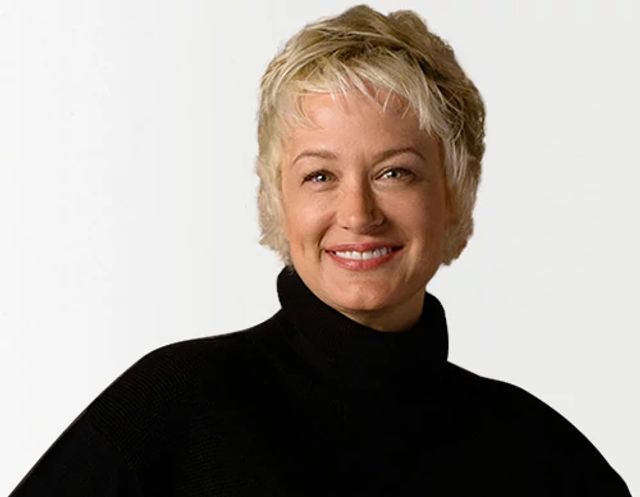
Nancy Jarecki’s stroke could have reduced her to a statistic. But her determination, humor and style paved a different path to recovery.
Phil Stieg
Hi, this is Phil Steig.
For our Season Six Finale we are recognizing Stroke Awareness Month with a very special episode of This Is Your Brain.
You are about to hear what it’s like to experience a stroke from the inside. This is a story told by Nancy Jarecki, – a businesswoman, wife and mother – whose resilience and good humor while recovering from a serious brain aneurysm was inspiring to all of us who treated her here at New York – Presbyterian Hospital.
To provide greater perspective and detail to her story, I will be joined by Dr. Hooman Kamal, a professor of neurology and neurocritical care here at Weill Cornell medicine, who was a key part of her treatment team.
What follows is a dramatic, funny and heart-warming story of one woman’s journey back from a life-altering experience. Dr. Kamal and I are pleased to share it with you.
Narrator
While her husband Andrew out of town, Nancy Jarecki is attending a VIP event at the Museum of Modern Art accompanied by her teenage son…
Nancy Jarecki
It was a special night. A really good friend of mine, Allie Wentworth, was having a premiere of her new TV show called “Headcase”. So you can imagine the irony of that when you hear my story.
Walking the red carpet, I meet up with her husband, George Stepanopolis. And talking to George. waiting for Allie to come off the red carpet, I was engaging in a conversation with him about his political show.
At the time, I did not have a headache. I felt great. I’m talking to him, a flush comes over me as though maybe I had low blood sugar. I didn’t have low blood sugar because I remember I had eaten a banana before leaving, just so I wouldn’t have hunger through the evening. George and I are talking. I feel this surge going up through my head, and he just stops.
He freezes. I’m thinking it was the flash bulbs from the red carpet. So I try blinking him out of this frozen image of him.
Then I’m thinking, Oh, I’m going to throw up Am I? Oh, no, I’m hot. I think I’m going to faint. I’d never fainted before. And at that time, another rush of heat comes through my head, and this liquid sepia goes over the frozen image of George. I say to myself, That’s not right. So I say to George, George, I think I’m going to faint. He says, Let me get you a chair. I say to George, No, I’m going down now.
A moment later, I I see, I wake up and I see these people in a fragmented image around me, and I can hear their voices, and they’re all touching me saying, Nancy, it’s Jessica, Nancy, it’s Holly, Nancy, and we’re right here, and we’ve called an ambulance.
Well, I didn’t think I needed an ambulance cause I just fainted. I am laying on the floor. It felt good. I felt very hot, and the marble was very cold to me, which was great.
Soon after that, my son, Maxon, comes to me and says, Mommy, mommy, it’s Maxon, they’re telling me you’re having a seizure. A seizure? I didn’t think you’d be conscious during a seizure. Now, why I was thinking that, I don’t know, because here I was being told I was having a seizure.
Phil Stieg
Hooman, what Nancy describes, do you find this to be typical in patients that you’ve seen in our intensive care unit after a bleed into their brain?
Hooman Kamal
Sometimes they don’t remember at all how they ended up in the hospital, but other times they have very vivid recollections. I think one thing that’s really interesting, but also challenging about the brain is that it can, injuries to the brain can result in such a wide variety of symptoms and problems that result in that injury. So this kind of vivid sensation that she describes, I would say is not unusual. Patients will really reference these out of the ordinary intense experiences like she reports.
Phil Stieg
In my experience also, I think it depends upon where the bleed occurs. If it occurs into a particular area of the brain that is sensitive to visual stimuli, they can have flashing lights, or they can see broad array of different colors. Obviously, if it occurs in a speech area, they’re going to sense that Gosh, my speech is off. Something feels funny. I’m not able to communicate. Or if it’s in a sensory part of their body, they’re going to have either abnormal hearing, altered hearing, noises in their ear. So any area of the brain can respond differently to, quite frankly, a “punch” in that area of the brain.
Hooman Kamal
Sometimes when it affects the part of the brain that is responsible for monitoring how you’re doing, patients can have major problems like being unable to move one side of their body, but they don’t recognize it. So there’s bystanders saying, “Well, something’s wrong. You’re slurring your speech and you can’t move one side of your body,” but the patients feel fine and they sort of resist going to the hospital. So yeah, lots of different manifestations.
Nancy Jarecki
Then the EMS come, and they’re very quick to deal with me. They’re asking questions. I’m answering the questions. They’re not listening to me. I later learned that I was not speaking. In fact, my eyes were somewhat rolled back, and I was not able to speak.
Then I was loaded up into to an ambulance, and that’s the first time I got really nervous and scared is because I’m in this ambulance, and I’m not sure where everybody is.
I saw the window in the ambulance of the cab up front. So I’m knocking on it and knocking on it – I’m looking for Maxon. And as I’m pounding, yelling, Maxon, Maxon, or I think that I am.
A hand comes over, and it’s Maxon, and he turns me, and he’s sitting right there.
When I reached the ER,. I realized that they had restrained me. I was not happy with that. And it scared me, and I did not feel like the feeling of being restrained
After they removed the restraints, they said they were going to have to do an MRI. And for whatever reason, I did not want to go into that tube. I was going to go into the abyss of black, and I didn’t want to do that.
And I just kept asking them, well, if I could just go to the bathroom. I have to pee. Just please let me go do that. And they’re like, No. The nurse, comes in and he gets on top of me with a Foley. So he was going to put a catheter me to release the fact that I had to go to the bathroom. And I am cursing at him, and I yell, “That’s not a real pee.” And I end up kicking him and just probably using the F word to get off of me.
They restrain me again. I calm down, and the ER people are now getting me prepped to go into the MRI.
Of course, my hair was up in bobby pins. They needed to get that out. And at some point, one guy was not getting my bobby pins out fast enough. And this guy just goes, You know what? Just cut them out.
I remember these big silver shears going across my eyes to go to the other guy, and they just kept cutting my hair. And I could feel the pull of it. So I thought, Oh, let me help them so they don’t dig into my scalp. And the guy thought I was being resistant. And so he put a seat belt head structure on my head. So at that point it just went black.
Music
Phil Stieg
The patient that comes in after a bleed into the brain, the first thing that we get is a CT scan because that’s the best way to see blood in the brain but that doesn’t give us the best anatomy of the brain, so we get an MRI and an MRA where we’re looking at the brain substance itself and also the blood vessels, and it gives us a very good definition of what in the brain has been injured, where the lesion, i.e., where the aneurysm is located, and what the anatomical relationship is between that lesion and what we refer to as eloquent parts of the brain, so that we as surgeons can then plan our treatment options.
Hooman Kamal
One thing that we’ve gotten since, I think, when Nancy was here is we now have a portable MRI machine that allows us to do a limited but still really good MRI scan in the ICU, which is really helpful for patients who are too unstable to go down for a regular MRI.
Phil Stieg
This again is part of Nancy’s personality, having the bobby pins in her hair and getting the hair cut out because she had too many bobby pins. What’s interesting about this is she neglected to tell us that after she had her hair cut off, she kept her hair short for, I don’t know, about 3 to 5 years afterwards because she liked it! (laugh)
Narrator
With her scans complete, Nancy has her first meeting with the surgeon on call that evening – Dr. Phil Stieg
Nancy Jarecki
I was taken to the ICU. I remember a gentleman approaching with a white jacket, and everything was really white, and his hair was white. And I remember him leaning down and a voice saying ——hi. And it was loud, and I thought, oh, he wants my attention. So that was the first time I hear this voice, and it’s kind of a voice of seriousness. So I immediately feel like, oh, So this sounds like a pivotal person that will be taking care of me. I first was like, Listen, I’m never going to remember your name, if you’re going to deal with me as a patient, you’re going to have to be less serious because you’re scaring me and you’re scaring everybody else.
So I believe that was the first bantering that I was having with him I really believe that the feistiness was something that I was using as a tool. Like these acting out episodes of humor or frustration kind of set me aside. If I’m going to go through this, I’m not going to be just another victim.
I remember that there was going to be a surgery, And that was the first time I heard aneurysm. and I kinda drifted off.
Phil Stieg
First surgery was the next morning where we took her to the operating room, and in order to do an open treatment of an aneurysm, we have to take a piece of the skull out, and then the blood vessels sit within creases of the brain. We dissect out those blood vessels, and I was able to get a clip on the aneurysm. And then we do an intraoperative angiogram to confirm that the aneurysm is gone, and then we put everything back together, and she woke up in the operating room.
Nancy Jarecki
It seemed all was going well. I wake up the next morning, and there is just a flurry going on. The medical staff were throwing things onto my bed, equipment, and there was a rush about it. And I thought, Oh, they’re moving me. Someone must need the room. Then it seemed that it wasn’t that someone needed the room. It was an emergency surgery on me.
Squeaky wheels down hallway, transition into music
And that’s when I remember going down the hallway in the gurney, and the music started to happen. And it was from the noise voice of the gurney and the wheels turning. And that’s when I think, for sure, I don’t want to go back into a surgery. I’m scared. So I used that music to calm me down.
Phil Stieg
The next morning she wasn’t as responsive, she wasn’t as bright, she wasn’t as communicative. We got a CT scan that showed some brain swelling, and with brain swelling there’s pushing of the brain. The only way to deal with that is to go back in and take part of the skull out just to give the brain room to expand. So that’s what we did. In those days, we did it differently than what we do now, but we took the skull out and we put it in the fat of the belly and store it so that it wouldn’t get infected and was with the patient. She didn’t like that.
Nancy Jarecki
Had the surgery, woke up, and I woke up again to that voice. Dr. Stieg explains to me that he had to do a surgery because the brain swelled due to the brain does not like blood in it. The swelling got too bad, therefore the pressure of it needed to be relieved. So he did something where he removed what he called the bone flap, a piece of bone, my skull, and he then put it into my lower abdominal wall.
The idea of putting a piece of your skull into your abdominal wall was funny in itself. Who would think of that? So I used that as something that could relax everybody. So I started to show off and say, Well, you guys, what he gave me was a skull baby. People really responded. And I just parlayed that into this fun experience, and that started to relax everybody.
I, who had three C-sections, thought, Oh, how convenient. There was already three incisions there., I was giving him a hard time that I already had three incisions for him, and he didn’t have to do that much work. And I go, why didn’t you just use the incisions that were already there? And I was giving him grief like, Oh, no. Do I have another incision? And he just looks at me and he goes, “Wait, are you complaining to me, giving me grief, where I just put the flap, the bone flap, to save your life? And I just remember he shook his head and he thought, She could be a nightmare. (laugh)
Interstitial theme music
During this break, let’s have a short quiz for our listeners.
We use the term “stroke” to refer to an incident of sudden change in blood flow to the brain. But, does “stroke” mean that too much or too little blood is getting to the brain?
Actually – both!
There are two categories of stroke. An ischemic stroke refers to the injury from lack of blood flow, like when an artery gets clogged up because of an abnormal clot.
In contrast, a hemorrhagic stroke refers to injury caused by excessive bleeding into the brain. Typically something has gone wrong with the arteries and they’ve leaked either into the brain itself or into the area around the brain.
The type of stroke that Nancy had was a hemorrhagic, where she bled from something called an aneurysm – a weak spot in the wall of a blood vessel that bulges out like a balloon.
Theme music under
Aneurysms are particularly dangerous because they can remain undetected for years but then can suddenly pop without warning – like when you’re on the red carpet at the Museum of Modern Art!
Phil Stieg
By this time in our relationship it was becoming apparent that Nancy has an incredible wit. She’s kind of the dynamo within the family from a humor standpoint. Everybody, her friends, were lightening up because now she was doing well and they could see that she was getting her humor back.
Narrator
Over the next few weeks Nancy’s sense of humor was seriously challenged by the process of recovery from a brain aneurysm.
Nancy Jarecki
There was an issue that the medical team didn’t want me to get, which is a vasospasm. In order to correct that, you have to do an angiogram where they jimmy up some liquid and a camera up your groin to then “de-stroke” these strokes in your brain. That was hard. That was very hard. It didn’t set me back, but I started to notice “Oh, this is serious.”
Phil Stieg
As we know, you know, vasospasm, blood vessels constricting down, is a risk associated after an aneurysm bleeds. Can you explain that for us?
Hooman Kamal
Yeah, it’s, it’s one of the more feared complications after this type of bleeding around the brain. There’s a lot of different theories about what causes it. You know, simplistically we think of it as just the nerves and the lining of the arteries getting really irritated by all the blood, and then the nerves make the arteries spasm and narrow, and in some cases narrow so severely that it’s choking off blood supply to the brain.
So the patient’s already had one type of injury from blood leaking out of the arteries and going outside of where it should be. And then that injury is being compounded by a second injury, which is the arteries narrowing too much and preventing enough blood flow coming to the brain. And it can cause a lot of additional injury if it’s not properly monitored for it and treated.
Phil Stieg
The hardest part about this really is that this is, this is a moment-to-moment problem. It’s not something that occurs and you can pick it up an hour later. If a person goes into this severe blood vessel spasm, you know, the brain can survive without blood circulation for maybe 4 minutes, and then you start getting injury. So what do we do in the ICU, or what does Dr. Kamel do? He practices the art of sleep deprivation. You know, you got to keep waking the patient up, making sure that they can do certain things. Can they count? Can they hold their hands up? You’re examining them moment by moment, and that is exhausting and emotionally exhausting for the patient, but unfortunately it has to be done.
Hooman Kamal
One thing that makes this very hard on patients is that the risk for this is last for a while after the initial hemorrhage. So we typically think about it for up to 2 weeks. So patients are being kept in the ICU. We’re waking them up very frequently to check on them. So it’s very intensive. The patients are being woken up all the time. We’ll give them various blood pressure medications to increase their blood pressure as needed, they keep having to get, poked with needles. So I’m not surprised that it, you know, it was rough for her, because it is really a very intensive experience.
Narrator
Refusing to take a passive role in her healing process, Nancy relies on her friends to devise some creative strategies.
Nancy Jarecki
While I was in ICU, I think to help with the news that I might not have a great memory, some friends thought, “Let’s get some big photos. We’ll blow them up and we’ll put them all over her room.”
Initially, they were told I might not have a good memory, so maybe this would show who I was, who people were around me, and to know that everybody’s thinking about me and there is support. I did feel safe with that, and it was very helpful.
So when I was in ICU, I absolutely loved the touch of people rubbing my hands and my feet, especially my feet. So I would It would keep my blankets up a little bit so it would expose my feet. That would invite somebody, and the lotion would be right there. And it really got me through the stagnant feeling of just lying there and that was also part of that sensation that I absolutely loved.
Phil Stieg
To be perfectly honest, the way I’ve managed patients in the ICU since this episode has been transformed by the experiences that Nancy had. She enlightened me to the importance of family and photographs and visitors and touch and eyeball-to-eyeball contact, not standing looking down. And most importantly for her is music because she has had a life full of music and hanging around with musicians. So for her, that was really important. And to this day, I say to family members now, bring EarPods, bring whatever, but play music for your loved ones.
Hooman Kamal
I agree. I mean, it’s such a clinical environment, and it can be, I think, very businesslike and almost sterile. And so I think anything that allows that comfort is really important. The pictures, when we take care of patients, we’re meeting people for the first time in these very intense circumstances. And some families will put up pictures of the patient from before they were so sick. Often they have a breathing tube in and we have minimal ways of interacting with them. And it is really, touching for us as the physicians and nurses to be able to see what this person was like and get a sense of their life from the pictures. And so I agree, I think that personal touch is really important, and I’m not surprised that that was really helpful to her at the time.
Phil Stieg
And it’s really transformed. I mean, she actually related to the nurses beautifully when she was in the step-down area. She would hang out at the nurses’ section and impart to them the importance of these components that she talks about in her recovery. And quite frankly, it’s had a great impact on the nursing staff as well.
Narrator
After nearly month in the hospital came a day of mixed emotions for Nancy…
Nancy Jarecki
Then when they realized I was healing, They were going to send me home, I was so I was so comfortable in ICU. I was so comfortable in my situation that when they said, We’re going to send you home now. You’re ready. I really got scared. I really felt a rug just came out from under me.
I did go home. That was a completely different journey, the recovery of just waiting for my brain to de-swell. Now I’m at home. I have a helmet. I have to wear it. I’m vulnerable. And there was really a sense of a void, because now it’s just me.
Narrator
Safe at home, Nancy continues to rely on the three pillars of her recovery; her humor, her music, and her friends.
I had many people come to visit. I found humor in that because I had this skull baby. And so whenever someone would come to visit me, I would make them feel it and exclaim, Can you believe it? Can you believe there’s a half a skull there? (laugh) I did that because deep inside, I knew that I was recovering, but I also knew that there was going to be this pending brain surgery to put it back.
So when I was getting through the recovery before my surgery, I did listen to a lot of music. And for me, it’s the country, Southern rock, the genre that I’m used to. And that’s what helped me overcome the fear. Because it just took me into some of a calmness and a feeling of safe because it was familiar. A lot of that music when I hear it now, that was playing when I was recovering, really still brings back this amazing feeling of calmness because I was so scared for my recovery at home.
Narrator
After a few months, Nancy’s third surgery was successful. The bone was returned to her skull, and she began to assess how her brain – and her life – has changed.
One thing that I didn’t expect was this sensation of this part of the brain where lighting and music would start to create a sensation. You could really feel it, and it would give such great pleasure. I just loved it.
And New York City, during this one season, these trees were lit up with so many Christmas lights. And I could walk down that street, look up, and almost be in a rapture. And I really love that. It would happen also with fire and music. And when you got all three of those. It was really amazing. It was so wonderful that it was unexpected too. When you have a brain injury or a change of life in that way, you could get depressed. With me, I went the other way.
I didn’t know what deficits I’d have. I knew that I really dodged a bullet with having big deficits, which was the walking, the talking, my memory. I had all that. The doctors said, you might not recover a lot of your information. You might not recover a lot of skills or memories. I remember that what worked for me was doing word searches. Doing things that were going to be compromised and being told that after 18 months, you’re not going to relearn it. I do call bullshit on that. (laugh)
Phil Stieg
Here’s an individual that came through a life-threatening episode and she now sees the light at the end of the tunnel. But she also had other friends that had had strokes and bleeds in their brain that did not do as well. So I think that that obviously opens up one’s heart, mind, soul, and spirit to, gosh, I’m kind of lucky. And how do I think and feel about this?
Hooman Kamal
I think part of that is we tend to take for granted the way we are. And then all of a sudden, in adulthood, your brain has changed. And now you’re perceiving the world in a different way. And I think it makes sense of that. That those new states of perception would be just because it’s unusual and you’re not used to it would be really more intense.
Phil Stieg
And again, Nancy is a very deep, thoughtful person. So little things like lights— you and I think they’re little, but all of a sudden it transformed the way she saw the world.
Narrator
17 years after recovering from her stroke, Nancy shares her perspective.
Nancy Jarecki
I think that resilience, has just always been part of my personality. And I realized that being a victim and being sad and being depressed or feeling like I’m never going to be myself again, I could reinvent myself if it got worse or if I had deficits. And I used this experience and turned it into almost a gift of appreciation. In many ways.
There’s different spectrums of a stroke. Mine, I was being I was able to be interactive. I now have met and visited several people who have had a stroke that were not able to speak or were at the very beginnings of their journey.
What I think is helpful and what people can do is call the person, go visit them at home, reassure them that whatever happened isn’t what they’re being defined by. I find a lot of people want to shy away. Oh, they’re home having a recovery from a brain injury. And it should be just the opposite. They should be interacting.
I do talk to people who have had a brain injury, a brain swelling, a stroke, and I encourage them to keep reading, to keep doing the exercises, to really do cognitive remediation. The plasticity of your brain will get better. When it gets better, they get more confidence. When they do get better in their brain, they’re more uplifted and they become happier and feel like they’re doing something for themselves.
Narrator
Dr. Kamal and Dr. Stieg share some parting words for people who think they – or a loved one – might be experiencing a stroke.
Hooman Kamal
We really, really want to emphasize to everyone out there that if you’re feeling off, like you’re, you know, having trouble with your vision or balance or weakness on one side of your body, if you see someone— if you’re walking down the street and you see someone who seems to be stumbling or not being able to speak, these can be signs of a stroke, and it’s very, very time-sensitive. There is no shame in just calling 911 and asking for help.
I think a lot of times we see people who come in, you know, 1 or 2 days later. By the time they come in, it’s too late. And I think there’s a certain reluctance or embarrassment or not wanting to bother anyone, and we would much rather have people come in, we will tell them, don’t worry, there’s nothing, nothing seriously wrong, than to see people come in when it’s too late.
Phil Stieg
Yeah, the one thing we have to remember is that time is brain, and as Houman was just stating, you got to get there fast so that we can intercede and prevent any damage. We’d rather be wrong about a stroke because remember, stroke is now again the third leading cause of death, but it is the number one cause of disability. So if we can prevent disability secondary to stroke, we will affect a lot of lives positively, but we will also reduce the healthcare costs.
Narrator
A year later, Nancy decided to throw a huge party (which she called jokingly called “The Brain Bash”) to thank all the medical professionals and friends who supported her throughout her recovery.
As always, the room was filled with music – this time performed live by family and friends.
Nancy Jarecki
Well, I have to say, when you go through something so vulnerable and the people around you are there to not only mend you, but to change your life. –I wanted to do something that would really show that I still thought about them and I still was appreciative.
Nancy at Brain Bash
And I just wanted to really, really thank everybody in the ICU. I wanted them to feel like, you know what, it’s gonna be different with me. And you know what, I had a great time in ICU! (crowd applauds – “WE LOVE YOU NANCY!)
Phil Stieg
I hope you enjoyed this special episode in observance of Stroke Awareness Month. I’d like to thank my colleague Dr. Hooman Kamal for joining us and sharing his insights on Nancy’s journey.
And of course I’d like to than Nancy Jarecki for sharing her inspiring story with us. It has been a pleasure getting to know you and having you as a friend all these years. Thank you for being with us.
Nancy Jarecki
Thank you. And I do want to thank you and the hospital for putting up with my feistiness. It worked well for me, I think, for both of us.
Phil Stieg
It worked well for all of us. It worked well for all of us. (laugh)
###
