



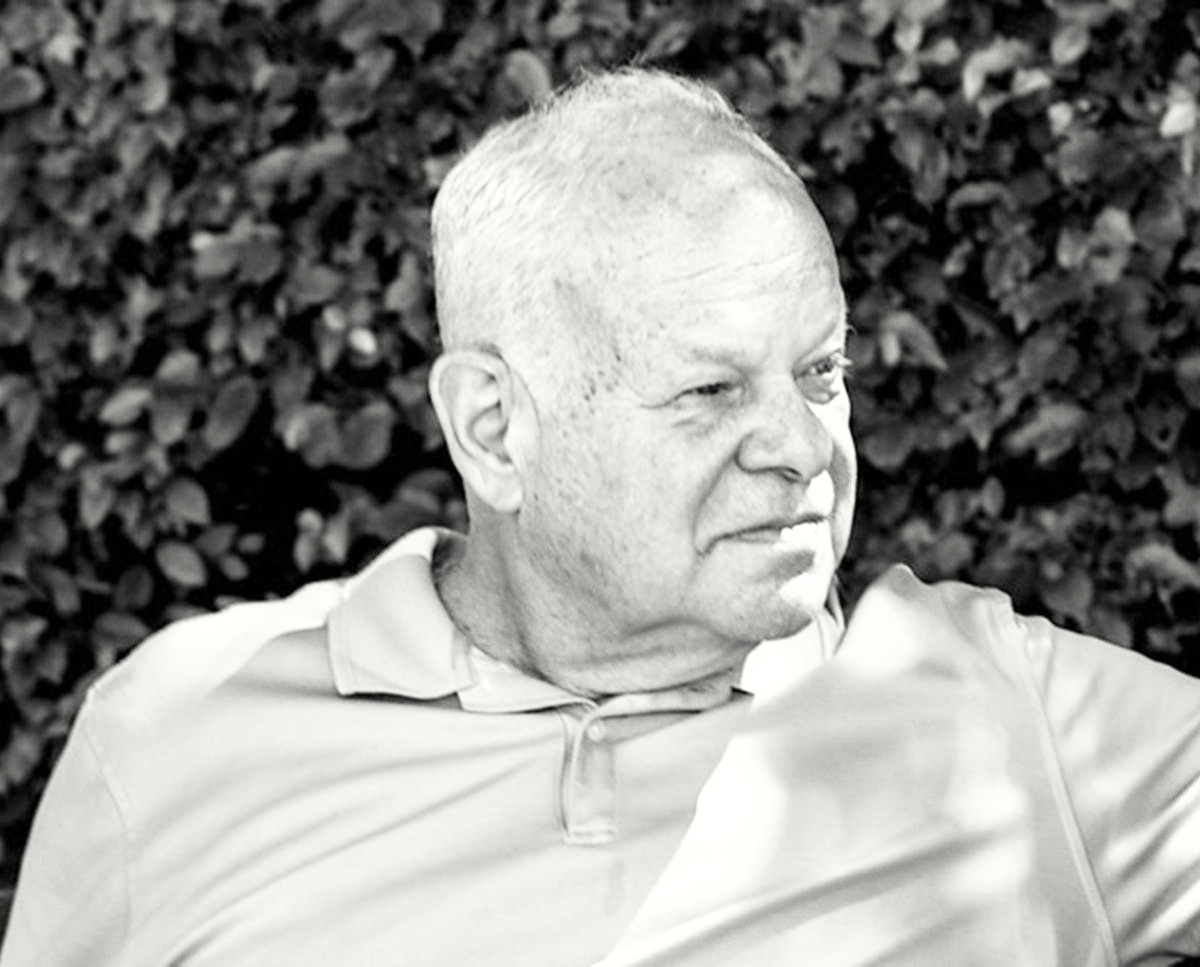
Why do some people bounce back from setbacks while others feel powerless to change their circumstances? Dr. Martin Seligman, founder of positive psychology and author of Agency: The Psychological History of Human Progress, joins Dr. Phil Stieg to explore how optimism, resilience, and our belief in our ability to shape the future influence everything from mental health to human progress. He explains the neuroscience of learned helplessness, why positive thinking alone isn’t enough, and how we can train our brains to overcome pessimism and regain a sense of control. Discover practical strategies for breaking free from negative thought patterns, building resilience, and creating a more fulfilling life.
Bio – https://ppc.sas.upenn.edu/people/martin-ep-seligman
Book – https://www.simonandschuster.com/books/Agency/Martin-E-P-Seligman/9781982190644
Phil Stieg
We have all been told at one point or another to think positively. But how can optimism and happiness truly transform our lives? My guest today, Dr. Martin Seligman, is a renowned psychologist and educator who is widely regarded as the founder of positive psychology. He is a leading authority on learned helplessness, resilience, and human flourishing.
In his new book, “Agency: The Psychological History of Human Progress”, he explores how optimism and belief in our ability to shape the future has influenced not only individual lives but the course of civilization. Today we’ll examine the concept of agency and why it may be a driving force behind all of human progress.
Marty, thank you for being with us today.
Martin Seligman
Delighted to be here, Phil.
Phil Stieg
So that everybody understands, how do you define agency from your perspective?
Martin Seligman
Agency has 3 components. Overall, it’s the belief that I can accomplish my goals, and it consists of efficacy, which is the belief that I can accomplish a specific goal in the here and now, optimism, which is the belief that I can accomplish that goal far into the future, and imagination, which is the range of goals I can accomplish in the future.
Phil Stieg
So as the founder of positive psychology, can you define what positive psychology is?
Martin Seligman
Yes, psychology as usual studies what cripples life, what gets in our way, and indeed the history of psychology as usual is to try to get rid of what cripples life. But where you get to if you were enormously successful is zero.
What’s our image about what makes life worth living? What are the elements that make life worth living. Positive psychology is the study of what enhances flourishing. How to have more positive emotion. How to have more engagement at work and with the people you love. How to have better relations. How to have more meaning and mattering in life, And how to have more accomplishment and achievement.
Phil Stieg
Which came first? Which is the chicken and which is the egg? Did agency come first or did the concept of positive psychology?
Martin Seligman
Positive psychology came first, uh, trying to convince my fellow psychologists to stop being victimologists and pathologizers and work on what made life worth living. And after 20 years of that, I thought I’d delve into history and see if I could apply the basic concepts of positive psychology into the question of when do we flourish historically and when do we stagnate.
Phil Stieg
How would you describe the moment that you realized that positive psychology and agency were important to you? Was it something in your life? Was it something in your research that happened?
Martin Seligman
It actually happened epiphanally, if that’s a word, in my garden when my daughter Nikki was 5 years old. This is now 30 years ago. We’re weeding. Nikki is having a wonderful time weeding. Throwing plants in the air, dancing and singing. I shouted at her, I said, Nikki, we’re weeding, get to work.
She looked at me, she walked away, came back and said, Daddy, can I talk to you? I said, yeah, Nikki, what is it? Daddy, do you remember before my 5th birthday that I was a whiner, that I whined all the time? Yeah, you were a little horror, Nikki. And she said, well, Daddy, on my 5th birthday, have you noticed since my 5th birthday I haven’t whined once? Yeah, you’ve been a pleasure. Well, Daddy, on my 5th birthday, I decided I was not going to whine anymore, and that was the hardest thing I’ve ever done. And if I can stop whining You can stop being such a grouch.
And that’s where it started.
Phil Stieg
When you start the book, you are talking about the concept of learned helplessness. What is learned helplessness?
Martin Seligman
Well, that’s where it all began for me. Now, this is more than 60 years ago, we discovered in the laboratory that when animals and people experienced events that they couldn’t do anything about, they became profoundly passive in the laboratory. So passive that when we gave them simple tasks like merely moving their hand to turn off noise, they would sit passively and not do anything if they had previously experienced noise they couldn’t do anything about.
And as I started to think about that, I thought about the concept of learning that nothing you do matters, but its reverse is learning mastery. And that’s how positive psychology emerged from the field of learned helplessness.
Phil Stieg
Can you, in a layperson’s framework, describe where learned helplessness is occurring in the brain? And is that, or are those the same areas that are active in agent— agentic behavior?
Martin Seligman
We know the answer to that now, and it’s mostly due to my colleague Steve Mayer, who died last month. Steve spent the last 30 years of his career trying to find out where in the brain learned helplessness occurred and where in the brain hope and mastery occurred. And here’s the short answer. I had promised no jargon, but here comes some jargon.
There’s a 50,000-cell site in rats called the dorsal raphe nucleus. It’s about 150,000 cells in humans. When that’s turned on, regardless of what’s happening in the world, That’s when passivity and helplessness occurs. When it’s turned off, you don’t become helpless. Conversely, there are a set of circuits from the front of your brain down to the dorsal raphe nucleus that are the hope and mastery circuits. When these are activated, they turn off the dorsal raphe nucleus.
So it turns out we know what’s in the brain is necessary and sufficient for producing helplessness and for producing hope.
Phil Stieg
So in one individual’s life, can they have learned helplessness in one category and agency in another?
Martin Seligman
Yes, and there are very interesting male and female differences about that. So it turns out that statistically males feel agentic over work and non-agentic about human relationships statistically, whereas females feel less agentic about work and much more agentic about love and interpersonal relationships. So we don’t have to be globally helpless or globally masterful. It turns out it’s quite domain-specific.
Phil Stieg
And has that changed since Gloria Steinem?
Martin Seligman
I haven’t seen a good statistical change. And I in fact did one. We took 1,600 novels from 1920 onward, half by men, half by women. And we read the last 3,000 words of 1,600 novels and classified the words for the amount of agency shown. So we were able to track male versus female authors over 100 years and male versus female characters over 100 years.
Here’s what happens, Phil. Up to 1990, male characters and male authors are statistically more agentic than females. But starting in 1990, it flips, and female characters and female authors are now statistically more agentic than male authors and male characters. So something happened about 30 years after Gloria Steinem started it off.
Phil Stieg
Can you define for us what you mean when you use the term agentic?
Martin Seligman
Yes, agentic means that you believe you can accomplish your goals. Versus helpless, in which you believe that nothing you do matters.
Phil Stieg
Is this really original, however? I mean, as I was thinking about the power of positive thinking, I always bounce back to Norman Vincent Peale. It’s not a new concept. So what’s new about your thoughts as it relates to positive thinking is good for you?
Martin Seligman
Well, we took it into the laboratory. We measure it. We increase it in people with interventions. We, uh, do experiments in which we decrease it or increase it, and we know how it works. What it supports about people like Norman Vincent Peale, is that positivity brings about 3 different things we care about.
From the point of view of agency, when you believe you can do it, you try. That’s the mechanism. From the point of view of optimism, when you believe you can do it in the future, you persist. And from the point of view of imagination, when you believe there is a range of goals you can achieve, you innovate.
Phil Stieg
I was actually surprised by your political evaluation and analysis looking at candidates that had more positive messages were more likely to win their election. Can you go through that a little bit?
Martin Seligman
So I’ve been interested over more than a century trying to predict who’s going to win presidential elections. And in general, we found that the optimistic candidate wins most of the time statistically. So we took Harris and Trump, and indeed you probably from listening to Trump think he’s less optimistic. But it turns out he’s darker. That is, he cites 4 times as many bad events as Harris, but he has an optimistic interpretation of them. He’s gonna take care of it, and he’s the only one who can.
And so what we did was to quantify all the press conferences through September, October, right to October 31st. Trump by October 31st was much more optimistic than Harris. We put this in a sealed envelope. We sent it to reporters. And I think we’re the only people who predicted a solid victory by Trump based on higher optimism.
Phil Stieg
Given the fact that positivity seems, per your analysis, to be so important to winning an election, is there a message that you can deliver to our politicians about how they should approach their campaigns?
Martin Seligman
Unfortunately, I tried that once. The only time I ever made the front page of the New York Times was the following, Phil.
In 1988, we took all the stump speeches of January of the Republican and Democratic candidates, and we content analyzed them for optimism under the thesis that the more optimistic candidate would win. We predicted George Bush and Michael Dukakis. And we put it in a sealed envelope and sent it to the New York Times.
And on May of the year, they opened it and indeed it was Dukakis and Bush. Within 2 weeks, I had letters from both the Democratic National Committee and the Republicans saying, how do we write optimistic speeches? And indeed, I sent them my manual for content analyzing optimism. And ever since then, it’s been bullshit.
Phil Stieg
(laugh) … so much for positive thinking!
Interstitial Break Here
Phil Stieg
Given the availability of information in the world today, why do you think that people that have, quote, “learned helplessness” stay in that state?
Martin Seligman
Well, learned helplessness is self-fulfilling. So once you’re in learned helplessness, The question is, how do you get out of it? And what sorts of things can you do it? So because it’s the belief that nothing you do matters, you don’t do things, you don’t try, and you don’t disconfirm it. So basically, a lot of my life has been concerned with creating interventions, both behavioral and cognitive, to break up helplessness and to increase agency. But the big problem With helplessness is you gotta get ’em started because they believe that nothing they do matters.
You have to disconfirm that.
Phil Stieg
Have you looked at professional athletes? You know, people that go into a batting slump or they go into a golfing slump or a tennis slump – is this similar?
Martin Seligman
Yep.
Phil Stieg
Kind of a periodic learned helplessness?
Martin Seligman
Let me describe what we did with Olympic swimming. And we’ve done the same thing with basketball and Major League Baseball. This is the 1988 American Olympics.
Who to put in the relay races? So when I talked to our coach, Nord Thornton, he said a lot of times when a great swimmer does badly in the individual events, They collapse in the relays, whereas some swimmers get energized. Could we predict that? So what we did is we took all of the Olympic swimmers – I’ll just describe one – and we measured their optimism and pessimism by questionnaire. Then, Nord says “into the pool, Matt, swim 100 fly”. Uh, Matt swam it in 50.1, which is a very good time. Nort said, “oh, Matt, 52.5! Get back in there and swim it again!”
Well, second time he swam it in 49.9. Optimistic swimmers get faster after a defeat. Pessimistic swimmers get slower after a defeat. And indeed, we— that’s what we did in 1988 with our swimmers, and we went on to sweep all the relays.
Phil Stieg
That’s incredible. The concept of positive thinking is, is more than just thinking positively. How can you explain the psychology that actually goes into positive What gets me out of the batting slump?
Martin Seligman
Yeah. Thinking positively doesn’t work. Essentially, thinking realistically and arguing does work. Let me, let me just give you an example of the difference between positive thinking and realistic positive thinking.
Phil, I woke up at 4 in the morning last night worried about this interview. I’m a depressive and a pessimist, by the way. And I still hear the voices that say, “geez, Marty, you’re 84 years old and you’re talking to an audience that’s half, a quarter. You can’t possibly do it. You’re over the hill!” And that’s, that’s the voice I said at 4 in the morning.
Well, I’ve become a very good arguer against the voice. I treat the voices as if they were a rival for my job or someone whose mission in life was to make me miserable. And I argue against them. So I said, hey, wait a minute. I gave a smashing interview last week in which I got the most critical kinds of questions and I nailed it. I can do perfectly well with Phil today. And that realistic argument is the only thing that works here. Thinking positively, footlessly does nothing at all.
pPhil Stieg
So are you flourishing? And if you are, tell me, what does it mean to flourish?
Martin Seligman
So flourishing is what makes life worth living as opposed to what destroys life, and there are 5 elements of flourishing. The acronym is PERMA: positive emotion, engagement, Good relationships, meaning and mattering, and accomplishment. If you have the elements of PERMA in your life and you’re doing well on the ones you care about, that is flourishing. So flourishing is about PERMA.
Phil Stieg
It’s interesting, I was just at a talk and one of the finance people was saying the difference between Prosperous and prospering sounds like much the same thing. You know, I can be prosperous, but have I helped other people prosper and fitting into society?
Martin Seligman
They’re intimately related.
Phil Stieg
Well, it also seems true given your historical approach when you talked about other countries that were actually more agentic or more successful. Can you go into that a little bit? I find it fascinating. I think our listeners would like to know.
Martin Seligman
Yes. So, the basic hypothesis of the book “Agency” is that when a culture religiously, philosophically believes in human agency as opposed to divine agency or chance or historical inevitability, That’s when progress occurs. Unfortunately, through most of human history, our religions and our cultures have believed the gods did it, or chance did it, or things are random, or things are historically inevitable. That’s when stagnation occurs. That’s the theory.
So what I did across both Chinese history and Western history was to quantify, you know, now with AI, the beliefs in human as opposed to divine agency against progress, predicting progress. Let me just give you an example. If we go through the Greco-Roman era, in which there’s an increasing belief in agency and a decreasing belief in the gods, into early Christian theology, even early Christian theology before Augustine is highly optimistic and agentic. It believes you can become holy and indeed God’s gonna judge you about what you did in life.
Well, in 383, Augustine comes along and argues that if you manage to do something good, or resist temptation, it’s because of God’s grace. And so this is the introduction to the stagnation of the Middle Ages, the belief that God’s grace rather than human agency leads to accomplishment collapses and we get almost 1,000 years of stagnation.
Phil Stieg
What about authoritarian societies? You know, when you think about what happened in Germany in the ’40s, what recently happened in Venezuela, what’s going on in Iran. How do we help those civilizations gain an agency? Is it through the internet and through AI?
Martin Seligman
I don’t have a direct answer to that, but one thing that’s very important in positive psychology is the authoritarian question. So for every endeavor I know, if you choose it yourself as opposed to being told to do it, it’s more enjoyable and it leads to more flourishing and productivity. So the huge disadvantage of authoritarian society is that by definition it destroys flourishing. So while I don’t have a remedy for North Korea or Iran. I believe that authoritarian societies are self-destructive in the long run.
Phil Stieg
So for my last question, I always like to end on a positive note, and I’d really like you to look at the concepts of efficacy, optimism, and imagination and give our listeners some ways in which they can improve their agency in each one of those 3 categories? Are there exercises? What should they do to gain agency?
Martin Seligman
I’ll give you at least one good example for our listeners. This has to do with, uh, efficacy and Optimism. We are by nature catastrophizers. So when we get threatening news, we are for good Pleistocene reasons attracted to very dire interpretations. So let me give you the – an example here, Phil.
Listeners, close your eyes. It’s noon on Friday. You get an email from your boss that says, come see me at 4 o’clock. Okay, you can open your eyes, Phil. What do you think? Uh, well, you— I know what you’re thinking. Um, I’m gonna be fired. This is it.
Now the question is, catastrophic thinking is learned helplessness. You give up. What can you do? And here’s what we do. We’ve done it with 40,000 drill sergeants in the United States Army. We’ve done it in psychotherapy. We do it in corporations.
What’s, what’s the very worst thing that could happen at 4? Get into it. Think about, well, I’m gonna be fired. She read my, uh, memo about the advertising campaign and she hates it and I’m gone. Uh, okay, good. Now, Phil, what’s the very best thing that could happen at 4? Well, she read my memo on the advertising campaign and she loves it, and I’m going to get a raise. I might even be promoted at 4 PM. Okay…
Now what’s the most likely thing that’s going to happen at 4 PM? Well, she read my memo, uh, she kind of liked my ideas, but the budget was way too high for the company. Uh, what can you do to plan for the most likely scenario? So basically, by having people live lively, imagine the worst case, the best case, the most likely case, we get people to plan for the most likely case. Uh, that’s the best solution to catastrophizing that I know, and it works.
Phil Stieg
But every night you turn on the news and it’s always one catastrophic story after another. You turn it on in the morning, what’s the first thing they tell you about? A murder in Brooklyn, a murder in the Bronx. It’s, uh, our media.
Martin Seligman
The media appeals to the catastrophizing brain, and that’s why positive psychology is important. Negativity comes naturally. We’ve got a brain for it. The— our ancestors who survived the ice ages were not the ancestors who believed it’s a beautiful day in Martha’s Vineyard today, tomorrow’s going to be beautiful. They got crushed by the ice. The brain we got was the catastrophizing brain that comes naturally. What needs teaching is positive psychology.
Phil Stieg
Marty Seligman, thank you so much for writing your book, “Agency: The Psychological History of Human Progress” . Learned helplessness doesn’t have to be the focus on our life, but we can have a life worth living with positive psychology, and that each one of us can lead agentic lives.
Thank you so much for being with us today. It’s been a really enlightening discussion.
Martin Seligman
Thank you, Phil.
