








Bio / Website – https://dilipjestemd.com/
Although memories fade, hearing declines and our bodies suffer aches and pains, there is one benefit to aging that we can actually gain with each passing year. It’s called wisdom.
But just because someone is older, it doesn’t mean they are wiser. It takes a certain type of person to learn important lessons from their life experiences.
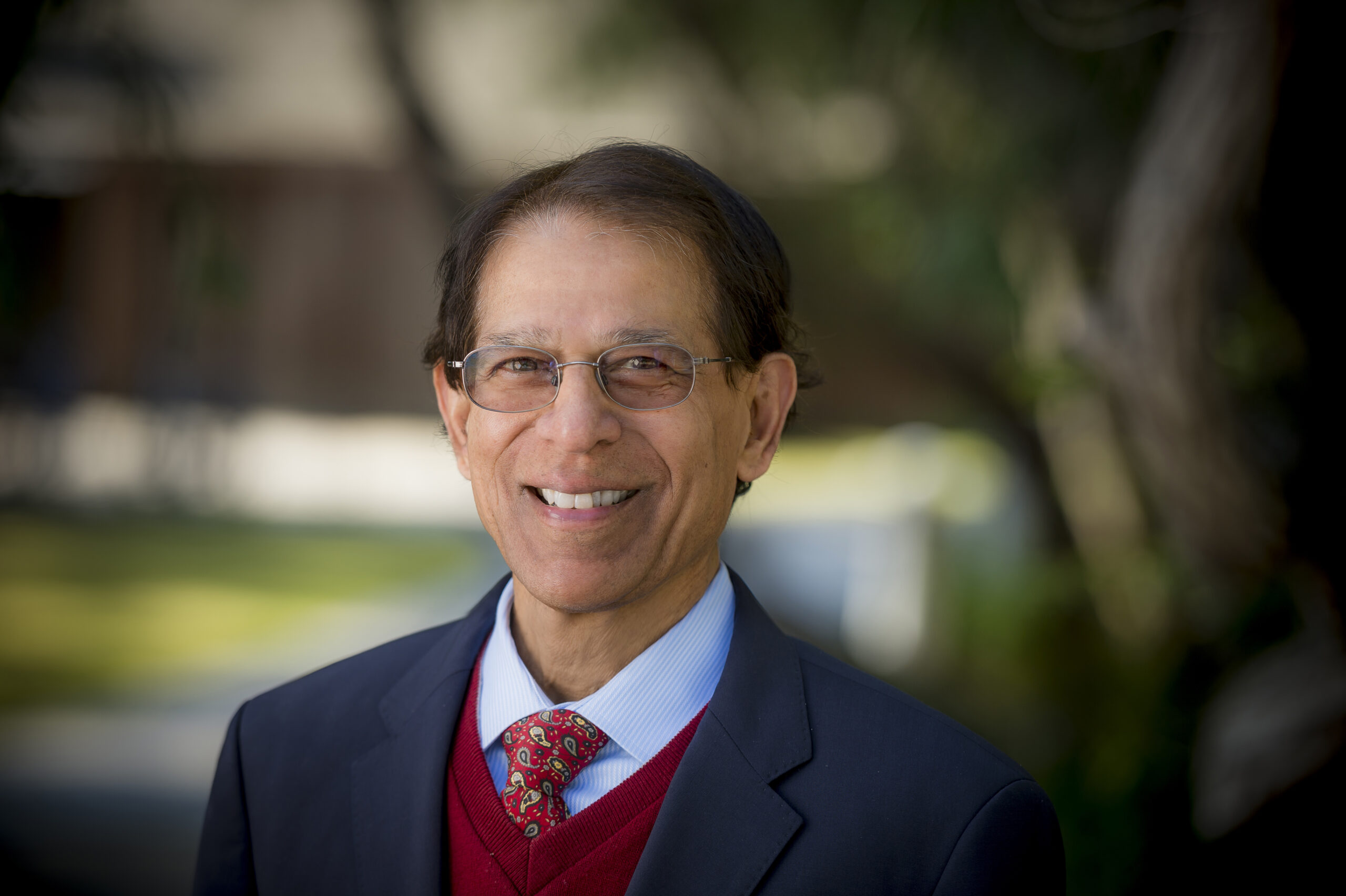
Dr. Dillip Jeste reveals what he has discovered after studying wisdom for decades, including the neuroscience of the wise brain, emphasizing how cultivating wisdom enhances brain health as well as offering some insights on how to develop and nurture wisdom in yourself, at any age.
In a larger view, Dr. Jeste discusses the importance of wisdom for the health of our society.
Phil
Do you know someone you think is wise? But what exactly is wisdom? Is it something that comes with age and a lifetime of experience? Or can someone be wise at any age? These questions have been around for centuries.
In modern times, no one has examined this topic more thoroughly than Dr. Dilip Jeste, who has pioneered research into exploring the neurobiology and psychology of wisdom. Today, we’ll be discussing his book, “Wiser: The Scientific Roots of Wisdom, Compassion, and What Makes Us Good”. It is not only a not a breakthrough examination on this topic, but a guide to help us nurture our own personal wisdom and better understand how it can lead to healthier and happier lives.
Dilip, thank you for being with us today.
Dilip Jeste
Thank you, Philip, for inviting me. I’m delighted.
Phil Stieg
In reading your book, I have to admit, I had to look up what wisdom was. In Webster’s, they say in insight, judgment, knowledge, … discretion, gumption, horse sense. How do you define wisdom?
Dilip Jeste
I define wisdom as a personality trait with specific components. And these components are prosocial behaviors, which is empathy and compassion, emotional regulation with positivity, self-reflection, accepting diversity of perspectives, decisiveness, wise counseling, and lastly, spirituality. But the most important one of these is empathy and compassion. That is a must for wisdom. = So you cannot have a wise person who doesn’t have empathy or compassion.
Other qualities would vary. In a sense, some people would be more decisive than others. Some would be more spiritual than others, and that’s okay. But empathy, compassion is a must. Also, emotional regulation, self-reflection, they are also important components of wisdom.
Phil Stieg
How do you differentiate emotional regulation and emotional IQ? Or are they one in the same thing to you?
Dilip Jeste
People often confuse wisdom and intelligence. They often say somebody’s wiser, smarter, and more intelligent. That’s not the case. Intelligence is necessary but not sufficient for wisdom. People with high IQs are often very unwise. Example, terrorists, mass murderers. They often have high IQ. I mean, imagine the people who put together the 9/11 attack. They must have been very intelligent to do, but they were very antisocial. They killed thousands of people, and that’s what they wanted to do. So wisdom is much more than intelligence, and that applies to emotional intelligence also.
Phil Stieg
So give me examples of individuals that you would say are wise.
Dilip Jeste
Think about someone like Mother Teresa, for example, and I’m not focusing on the religion side of that, really. It’s not the religiosity side, but it is her empathy and compassion. What she did was, she moved India. She was in Kolkata. And from the time that she was young, focused on helping people. What she did in such a nice way that other people actually joined her. And so she developed a large group of people who were helping poor people. That’s a role model for what a leader should be like. And again, she was a different a than a political leader, and I can understand the rules would be different somewhat. But the baseline is same, that you establish new connections with a bunch of people outside. The goal is to help them and help others.
Phil Stieg
In thinking about wisdom, would you characterize it as a gift, a talent, a virtue, an aptitude, or is it something you’re born with and it just matures over time?
Dilip Jeste
I think it is definitely something we are born with to some extent. It is a personality trait, like resilience, optimism, so on. I do think that it is partly genetically determined, no question about that. And we see that right from early childhood, but it also changes, and it can increase, it can go down in specific components or others. And it partly depends on how we handle the environment. Also, it depends on the family, the environment that we live in, the school we go to, the people we work with.
Helping kids to grow is one of the most important things we need to do as a society.
And what we do currently in education is focusing on three R, reading, writing, arithmetic. I think that’s really not enough. What we need to do as parents, teachers, social leaders, is to see how we can improve their empathy and compassion, emotional regulation, self-reflection, acceptance of diverse perspectives. These are critical component for their, not just survivor, but their well-being, and ultimately, the society’s well-being.
Phil Stieg
Can you be wise and still have character flaws?
Dilip Jeste
Sure. I mean, again, wisdom is a continuous thing, not yes or no. There are some people who are wise on some elements of components of wisdom, but not on others.
Phil Stieg
For the individual who has wisdom, is that equivalent to being happy or not?
Dilip Jeste
Usually, yes. I would say. And that is one of the reasons why wisdom is so necessary for the society, much more than intelligence, because wisdom is associated with mental well-being and happiness. There is really no question about that, because when in life, things are going to go right, then something go wrong. A wise person It doesn’t get affected too much when things are going wrong. He can control that, and he has positivity.
Well-being and happiness is what the society needs, and that can come with wisdom, not with pure intelligence or not with some of the other social problems.
Phil Stieg
When I think of wisdom, I of individuals that are probably more philosophical or possibly religious. But is there also scientific wisdom?
Dilip Jeste
Yes, because the basic principles are same. By the way, not all wise people are necessarily believers in God or even spiritual. So people can be different in specific aspect. And likewise, not all the religious people are wise either. Millions of people have been killed in the genocides associated with the different religions. So there is no single character that really distinguishes people.
A wise person, including wise scientists, would take the things in stride. You don’t get carried away by anything, either good thing or bad thing. So again, that emotional regulation, limitation of your reaction to something is really important, and putting more the positive side on that. And that is what really we all need, especially when we raise our kids, we know that that’s what we need. But the whole society needs to do that.
Phil Stieg
You also talked about some other components that maybe weren’t as important in wisdom, such as spirituality, sense of humor, and being open to new experiences. Can you expound on that a little bit?
Dilip Jeste
Yeah, sure. So starting with spirituality. So spirituality means not believe in any specific God. It’s not a specific religion. But believe in some higher power. It could be nature, It could be something else, but higher power that is good for you. I think that’s the important part, that even when things are going wrong every which way, including natural disasters or whatever is happening, if you are spiritual, you say that terrible things are happening right now, there is some higher spirit that wants to save humanity, that wants to improve people’s wellbeing, and that will take over. It will take some time, but it is bound to take over because that is what humanity is.
So you have that belief that makes you become less flustered when things are going wrong. And likewise, also, you don’t get too happy when things are going right because you can say, no, right now things are going great, but they will go wrong, and that’s okay. That’s just a part of growing up.
Sense of humor, I think in a way, it is related to same thing, in the sense when things are going wrong, and especially everybody’s angry, et cetera, sense of humor actually helps to bring the tension down. I think it depends a lot on the type humor we are talking about. We’re not talking about sarcastic humor. It is more of a pleasant humor. You look at the positive side of something and make fun, including making fun of yourself instead of hurting others.
So what is the third thing?
Phil Stieg
Being open to new experiences.
Dilip Jeste
I really think that is an important part of being wise because you have to know the different parts of community, different parts of life, so many different things that are going on. And if you restrict yourself to only one thing or one group of people, we are not going to be wise.
There is some intelligence clearly that is necessary for wisdom. But that intelligence doesn’t mean score the IQ. It means a breadth of experience. but not so much that you don’t have any depth. So we all have our own depth. We are interested in something, whether it is science, medicine, something like that. At the same time, we should pay attention to other things in which society is interested, from sports, for example, or music, so on and so forth.
Phil Stieg
Do you think that with the marginalization or the lack of dialog going on in society, that there’s going to be a drop off in wisdom in the next decade?
Dilip Jeste
I really think that is almost happening.
Right now, the whole world is so polarized. People have different perspectives. Nothing wrong with that. People can have different perspectives. The problem is that somebody who has a different perspective from mine is my enemy. That is how we think about that. That is wrong. We have to be friends.. There’s no question that we are facing a loneliness pandemic, which increases the mortality. And that loneliness comes from polarization, because then we isolate ourself. And that is why, what I call either antidote or vaccine for loneliness pandemic, is wisdom, especially the compassion component of wisdom.
Phil Stieg
So in saying that, that last sentence that you just made, are we saying that in order to be wise, you have to have all of these qualities that you outlined, the empathy, or could you have one or two and still be wise? I can’t believe it’s an all or none thing, but how much of it do you have to have to have a balanced, wise life?
Dilip Jeste
I would say the empathy and compassion are the most important. We need to have. Other components, they vary. Say, some people have more emotional regulations, some people have more decisiveness, some people have more spirituality. That’s okay. But so long as they have something of each of these components and not zero. If they have zero, for example, acceptance of different perspectives, that person is not likely to become wise ever. So we do need some level of each of these components, but mostly, as I said, empathy and compassion.
Interstitial theme music
Narrator:
In his book entitled “Wiser – The Scientific Roots of Wisdom” our guest Dr. Dilip Jeste describes the process through which his research team attempted to identify the physical center of wisdom in the brain. The key to their search was one of the most famous brain injuries of the 19th century – the story of Phineas Gage.
In 1848 a twenty-five-year-old railroad construction supervisor named Phineas Gage was preparing an explosive charge in a rock ledge. Suddenly the charge went off, sending a thirteen-pound iron rod rocketing high into the air, passing through his left cheek and out the top of his skull before landing eighty feet away.
Miraculously, Phineas survived the accident – but not unscathed. It became apparent to those who knew him that Phineas had undergone a sudden and quite dramatic change in his personality. Before the accident he was described as hard-working and well-liked by his employer, but afterwards they reported that he had changed:
Reading from contemporary report
[Mr. Gage] is fitful, irreverent, indulging at times in the grossest profanity … A child in his intellectual capacity and manifestations, he has the animal passions of a strong man. In this regard his mind was radically changed, so decidedly that his friends and acquaintances said he was “no longer Gage.”
Narrator:
Nineteenth-century neuroscientists had long debated as to whether the brain had specialized regions for each of its functions, or whether the whole brain was one large, undifferentiated organ – secreting thoughts the same way that the liver secretes bile.
Phineas’ impulsive behavior and lack of inhibitions appeared only after he suffered physical damage to the frontal cortex. It was clear evidence that certain areas of the brain had specialized roles in controlling behavior. It was a paradigm shift in our scientific understanding of the brain.
In studying this case – and dozens of other “modern-day Phineas Gages,” it is Dr. Jeste’s conclusion that our “physical capacity for wisdom” resides in the same frontal cortex where Mr. Gage experienced his traumatic injury.
There’s a saying among nuclear physicists; studying the structure of the atom by using a particle accelerator is somewhat like trying to figure out how a fine Swiss watch works by smashing it against the wall and picking up the pieces that fall to the floor.
In a sense, the same could be said by neuroscientists.
Thankfully, with modern imaging technology, today’s neuroscientists do not have to rely on freak accidents to help advance knowledge in their field.
The skull of Mr. Phineas Gage – along with the iron rod that had once passed through it – are still on display at the Harvard Medical School as a gruesome reminder of how his tragic accident made a crucial contribution to our understanding of the brain.
Theme music out
Phil Stieg
I’m unclear because in one part of your book, you said that wisdom and age are not inextricably bound, but then you also say that wisdom seems to be more common in older people. So you can’t have it both ways. You’re going to have to come down on one side of the coin for me. Is our age and wisdom linked or not?
Dilip Jeste
The first thing to stress is that aging is very heterogeneous. There is no single rule that applies about aging that applies to all people
Regarding wisdom and aging, the literature is not very clear, partly because there have not been too many longitudinal studies measuring wisdom in a meaningful way, in a valid way. But I think it looks like wisdom, in many people, continues to increase until about 70, 75 or so. After that, it becomes hard for wisdom to continue.
Numerous cross-section studies have consistently shown that older people in their 60s, 70s have higher level of empathy, compassion, emotional regulation, self-reflection than people in their 20s and 30s. And there is a neurobiological basis for that. People who are active, older people, those who are active, in them, you see increased number of synapses, even increased number of neurons in specific subcortical regions, like dentate gyrus of the hippocampus and periventricular area. And there is also differences in the effects of the hormones. For example, the effect of dopamine amygdala goes down with age, bringing in more emotional regulation. This is something that was unthinkable at one time. This is neuroplasticity of aging. I know when I went to medical school, if I said that a new neuron can form in an older brain, people would laugh at that. Today, we know that that is the case. But of course, in people who are active.
When some who are clearly active – physically, socially, cognitively, mentally, there will be this neuroplasticity and their wisdom will increase. Whereas those who don’t, then the degeneration decline will take over and their wisdom will go down.
Phil Stieg
So what is the grandmother hypothesis?
Dilip Jeste
Yes. It starts with actually the Darwin’s hypothesis of survival of the fittest. He said that animals and humans, we survive so long as we can produce babies, because older animals, older people die. They have to be replaced by babies. And so long as we can produce babies, we are helping, right? When we stop producing babies, we are no good, and that’s where we die. And that’s what happens in most animal species, not all, but most.
In humans, our average lifespan in 1900 was 45. But the lifespan is growing. Now, today, it is over 80 in many countries, and it will grow to 90. That’s the expectation in a few years. How is it possible that we continue to survive for several decades, even when we are not contributing to this species survival?
We don’t produce babies. Why does the nature allow us to survive? It makes no sense, right? And that is where this grandmother hypothesis of wisdom came.
So what they find is that a grandma who is wise, nice, kind, if she helps her adult daughter with life in general and upbringing of the kids, the adult daughter will have more children than her mom did. So let’s say, these days, in most families, there are two children. So the mother had two children. But she’s helping her adult daughter, which is great, because then the other daughter, she can have one more child. She has somebody taking care of that. And so she will have three children. So although the grandma herself is post menopause, she can’t produce babies. Her daughter can produce more babies. If you have wisdom and you help the younger generation, that will account for continued survival of the species and growth of the species.
Phil Stieg
Can someone become wiser? Can they do things to make themselves more wise?
Dilip Jeste
Absolutely. I mean, I would say that that is what we all must aim at. And there are things we can do to help. So there is, for example, there is something called three good things that when falling asleep, typically we just think about the thing that went wrong in the last 24 hours and we get stressed out.
Instead of that, think about three good things were somebody helped us, so we feel grateful, or we helped somebody, so we feel proud of ourself. So if we do that every night when we go to sleep, three good things, that becomes our second nature.
Second thing is volunteering, doing things from which you don’t make money, but that make us happy, working in a nursing home or helping disabled kids, that thing.
Another is we can set aside some time for self-reflection. Three times a week, We spend half an hour when we are eating breakfast just to think about things that stressed us out and made us happy in the last three days. That is how we will understand ourselves better, and then we will know where we can improve.
Meditation, again, has been shown to improve spirituality.
Accepting and meeting with people who are different from us. That’s also important. I think if we practice these things on a regular basis, people will become wiser.
Phil Stieg
I was most curious about your whole conversation about artificial intelligence and with the rise in suicides, drug abuse, and loneliness. Will AI and social media help with that? Do you envision a day where there will be an artificial wisdom? We already have data in medicine that people that go to ChatGPT for social interaction find it more empathic, more compassionate than interacting with someone like you, a psychiatrist. So where are we going with this?
Dilip Jeste
First thing is, social media, I don’t think will improve wisdom. Social media actually have a lot of downsides. If we change social media totally, some people call social media, anti-social media, really are hurting people, especially younger people.
AI, though, AI is different. The thing to keep in mind is that AI has grown so fast in the last 10 years, beyond expectation. Now, with the large language models it is growing so fast, we can’t even imagine what the AI would be like in 10 years
And again, bad people will use it for bad purposes. No question. But good people will use it, and we must use it. I really think so, because think about this, there are 8 billion people in the world. How many psychiatrists, psychologists, nurses, social workers do we have?
Phil Stieg
Not enough.
Dilip Jeste
But in half of the world, one such person for 100,000 people. So there is no way we can take care of so many people who need care. We have to use AI. I really think there will be in future, 8 billion robots. So everybody will have a robot in their home, and the robot will come to know them very well, and they will come to know, and the robot will know them better than any psychiatrist or psychologist can, because you spend all 24/7 with them for years. If we help the AI become an assistant or a therapist, something like that, it will do very well. So that is artificial wisdom.
In this sense, right now, the AI is focusing strictly on intelligence. We don’t need more intelligence. Instead of artificial We need intelligence. We need artificial wisdom. We need our robots to be not necessarily more intelligent, but more compassionate, empathic. Robots won’t have their own consciousness. They won’t have emotions. They won’t have their own spirituality, et cetera. But they will be able to detect emotions in the user. They will be able to detect compassion in their user, and they will be able to promote its increase.
Phil Stieg
you know as well as I do that AI right now doesn’t understand necessarily context, and it certainly doesn’t have agency in terms of being able to interact, but it wants to please the customer. And therein lies the dilemma that we’re going to have to solve that before we cut it loose on society.
Dilip Jeste
No, I agree. I don’t think we have “AW” right now. We don’t have a robot that will do that. But I really think in 10 years, they’re going to grow so fast that there will be wise robots. How we use them, and ultimately, they will have to be controlled by humans. Again, humans will be in charge. No question about that.
So right now we don’t have “AW”, but the way it will grow increases the chances that we’ll have it 10 years down the road, 15 years down the road, something like that.
Phil Stieg
So for the last question, we have to talk a little bit about the future. And in your book, you talk about society societal wisdom. What do you mean by societal wisdom?
Dilip Jeste
I would say it is the exact opposite of the loneliness pandemic. It is where people come together And can this happen? Actually, an example I gave in 1944, Second World War was actually heading, and it looked like a Holocaust, and Hitler was going to win, and then he was going to control the whole world. It didn’t happen. It lost. And the United Nations was born. World Health Organization was born in 1945, and they’re still around, and there was improvement.
We have nuclear weapons, but nobody has used them to hurt others. That doesn’t mean we won’t, people won’t. But so far, What people have imagined in 1943, that something like that would happen? People would have said, No, no way. It will not happen. We are just all going to be doomed. It didn’t happen. So that’s my positive take that right now, we are in a loneliness pandemic and really terrible, highly polarized, angry, anxious, depressed world. We can change that.
Phil Stieg
So you are a glass of beer half full. What about… Sometimes I think, however, that humankind has evolved about as far as it’s going to evolve. And it is sad then that we don’t have that societal wisdom. We still have wars that keep coming up. We still have murders. I’m not as optimistic as you beyond the fact that we want to try to control those negative things in our world.
Dilip Jeste
I think we don’t have a choice but to do that. But I do think that for our survival, I think we will need to do that. If humanity is going to survive, we will do that. The word Homo sapiens means wise man, so we better be wise.
Phil Stieg
From my perspective, the fundamental problem that we have is we’ve created in medicine that we, as doctors, have the solution, and it’s going to be a shot, a pill, or an operation. People don’t feel that there’s hard work work that’s involved in brain health. All the things that you’ve mentioned thus far are hard work. They’re time-consuming, not necessarily pleasurable. That’s the difficulty. That’s the rub.
Dilip Jeste
Sure. I think we need to prioritize it. We need to make it our goal. This is something that even the physicians and others should teach others. Teachers should teach their children. Parents should teach their kid. That think about wisdom. Think about how to be wiser, which means how to be more empathic, compassionate, control over our emotions, being self-reflective. That is a part of health. That’s a part of well-being. People don’t realize that.
Why is the loneliness a pandemic? Because it’s killing actually millions of people through diseases that are partly associated with loneliness, genetically, partly with the behavior, whatever it is. And if the solution for that is wisdom, should we not practice wisdom. We only focus on treating symptoms that the patients have. We should focus on how to improve their well-being, and how to improve their well-being is by increasing their wisdom. So that should become a part of medical care.
Phil Stieg
Dr. Dilip Jeste, thank you so much for spending this time with us. You’ve described to us the components of wisdom, of empathy, compassion, altruism, emotional stability, decisiveness, reflection, and pragmatic knowledge of life. But also importantly, you talked about spirituality, having a sense of humor, and being open to new experiences. Thank for enlightening us on that, but also on ways that we can gain wisdom by just having some good thoughts when we go to sleep at night, volunteering, taking time for self-reflection and meditation. All of these are so important in our daily lives. Thank you for enlightening us on that.
Dilip Jeste
Thank you for inviting me. It was a pleasure to talk to you.

